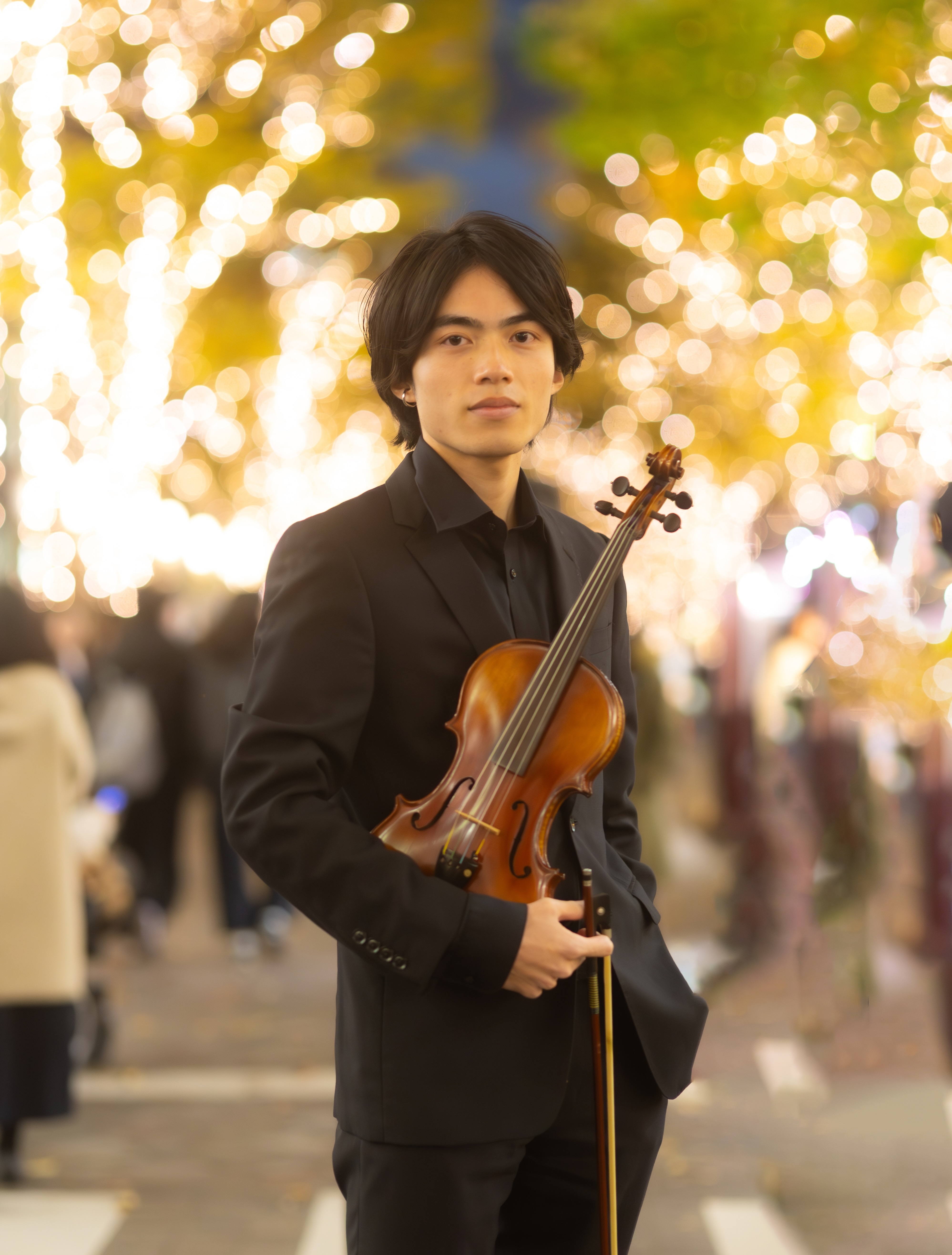
音が消えたあと、
あなたの中で鳴りつづけるもの。
それを、僕は作品と呼ぶ。
NEURO ROMANTIC — 神経のロマン主義
アルゴリズムが「最適解」を差し出す時代に、人はいつ、なぜ心を震わせるのか。
僕はヴァイオリンを弾きながら、その問いを脳科学と数理モデルで追いかけている。
音は空気の波として身体に入り、心拍を揺らし、呼吸を変え、やがて神経の中に「余韻」として残る。僕にとって作品とは、楽譜でも録音でもなく、その余韻のことだ。
だから舞台の上では、聴く人の身体もまた楽譜になる。バッハやヴィヴァルディは、その場にいる人々の呼吸に合わせて組み替えられ、古典は化石ではなく、いま生きている生態系として鳴りはじめる。
科学で感動を解剖したいのではない。科学で、感動を守りたい。
計算の時代に、震える身体を取り戻すために。
これを、僕は NEURO ROMANTIC と呼んでいる。
In an age when algorithms hand us the optimal answer, when — and why — does a person still tremble? I chase that question with a violin, and with neuroscience and mathematical models.
Sound enters the body as a wave. It sways the heartbeat, reshapes the breath, and stays in the nervous system as an afterglow — what Japanese calls yoin. To me, that afterglow is the work: not the score, not the recording.
So on stage, the listener's body becomes part of the score. Bach and Vivaldi are recomposed to the breathing of the room, and the classics sound not as fossils but as a living ecosystem.
I don't want to dissect emotion with science. I want to protect it. To give back a trembling body to an age of computation. I call this Neuro Romantic.